Why Reading Matters for the 11+
Reading plays a vital role in preparing for the 11+ exam. Regular reading helps children develop a wider vocabulary, improve their comprehension skills and strengthen their ability to concentrate for longer periods of time. These skills are particularly important when answering challenging exam questions, where children need to read carefully, understand unfamiliar words and identify key information quickly.
Reading also helps to broaden general knowledge and develop critical-thinking skills. Exposure to a variety of books, topics, characters and situations encourages children to make connections, draw conclusions, understand different perspectives and think beyond the information directly given to them. All of these skills can support them when tackling the different types of questions they may encounter in the 11+.
Regular reading can also have a positive impact on writing skills. By seeing how good authors use vocabulary, sentence structure, punctuation and descriptive language, children naturally become more familiar with what well-structured writing looks like. Over time, this can help them develop a richer vocabulary and greater confidence when expressing their own ideas.
For these reasons, reading should be seen as an important part of 11+ preparation, rather than simply another task to complete. Even a small amount of reading each day can make a difference, particularly when children are encouraged to discuss what they have read and explain unfamiliar words or ideas.
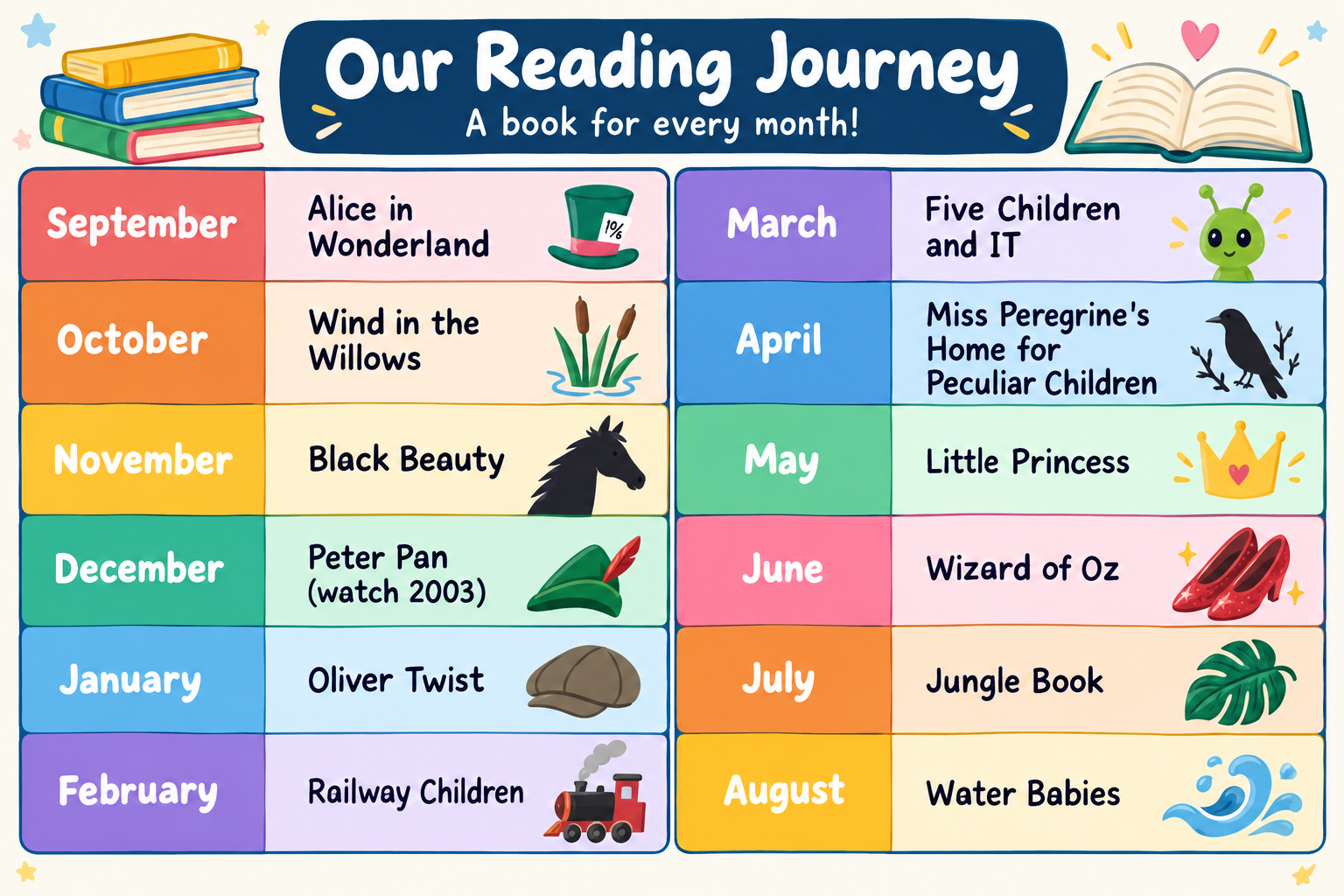
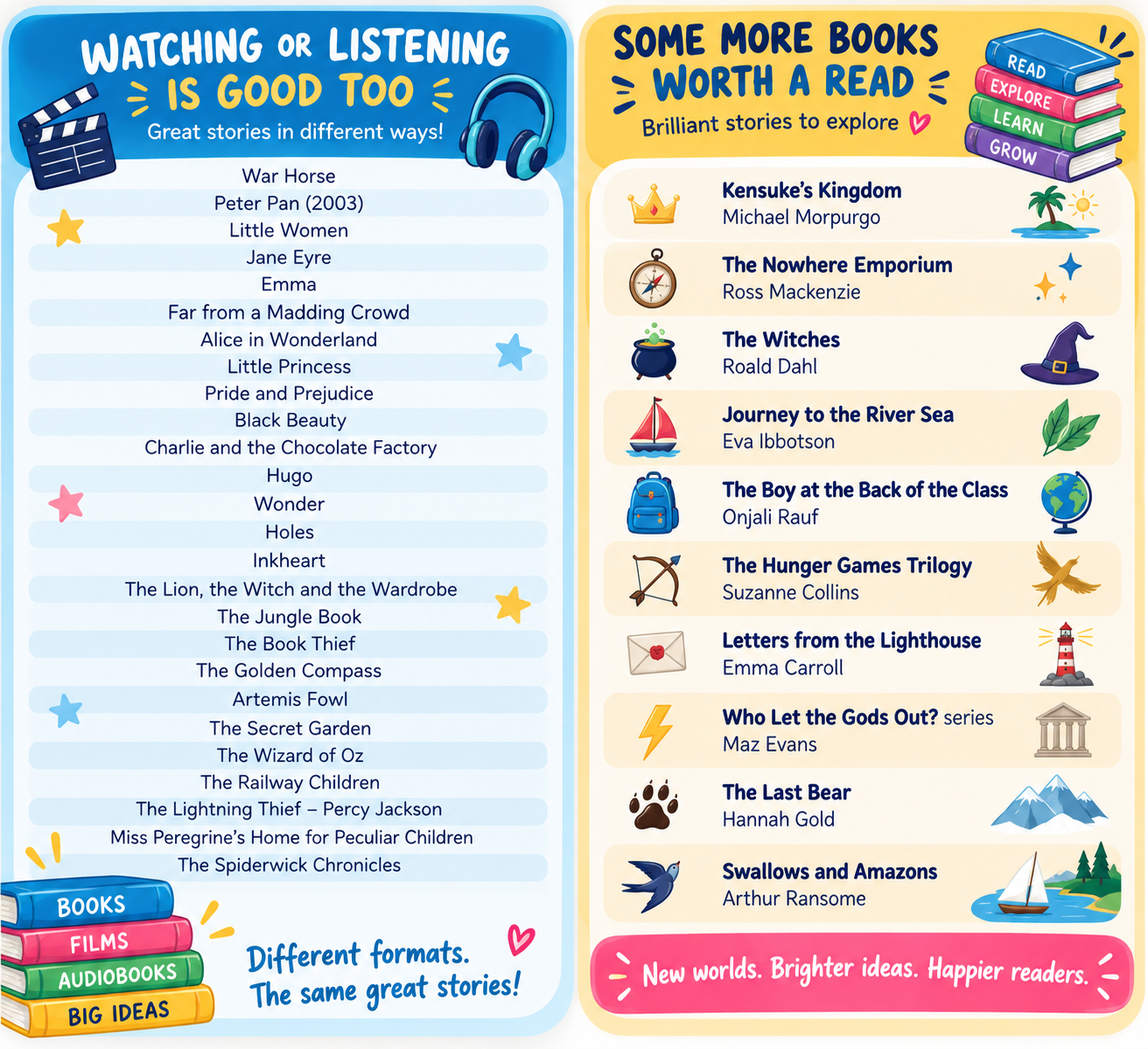
The Eleven Plus exam tests children across a diverse range of texts. Although the list below is not exhaustive, engaging with the films and content listed will help children understand key elements like character, setting, and narrative.
Each month, we will ask children to complete a comprehension exercise based on this list, which can ease the pressure of tackling more complex material.
Making Challenging Books More Accessible
Some texts, particularly older or classic literature, can initially feel challenging. The language may be unfamiliar, the sentence structures more complex, or the setting and characters difficult for children to understand.
One helpful way to introduce a challenging story is to watch a film adaptation alongside reading the book. Watching the film can help your child become familiar with the plot, characters, setting and historical context, making the original text easier to follow when they return to it.
Where possible, encourage your child to watch with subtitles switched on. This allows them to hear the language while also seeing the words on screen, helping to reinforce vocabulary, spelling and comprehension.
The film should be used as a support for the book rather than a replacement for reading it. After watching, encourage your child to talk about the story, compare the film with the book and identify anything that was changed or left out. This can turn a potentially difficult text into a much more enjoyable and accessible reading experience.
Remember: the aim is not simply to read as many books as possible, but to develop confident, curious readers who can understand, discuss and think critically about what they read.